Request Quote
Scan the QR code below to connect with us on WhatsApp.

Request Quote
Scan the QR code below to connect with us on WhatsApp.
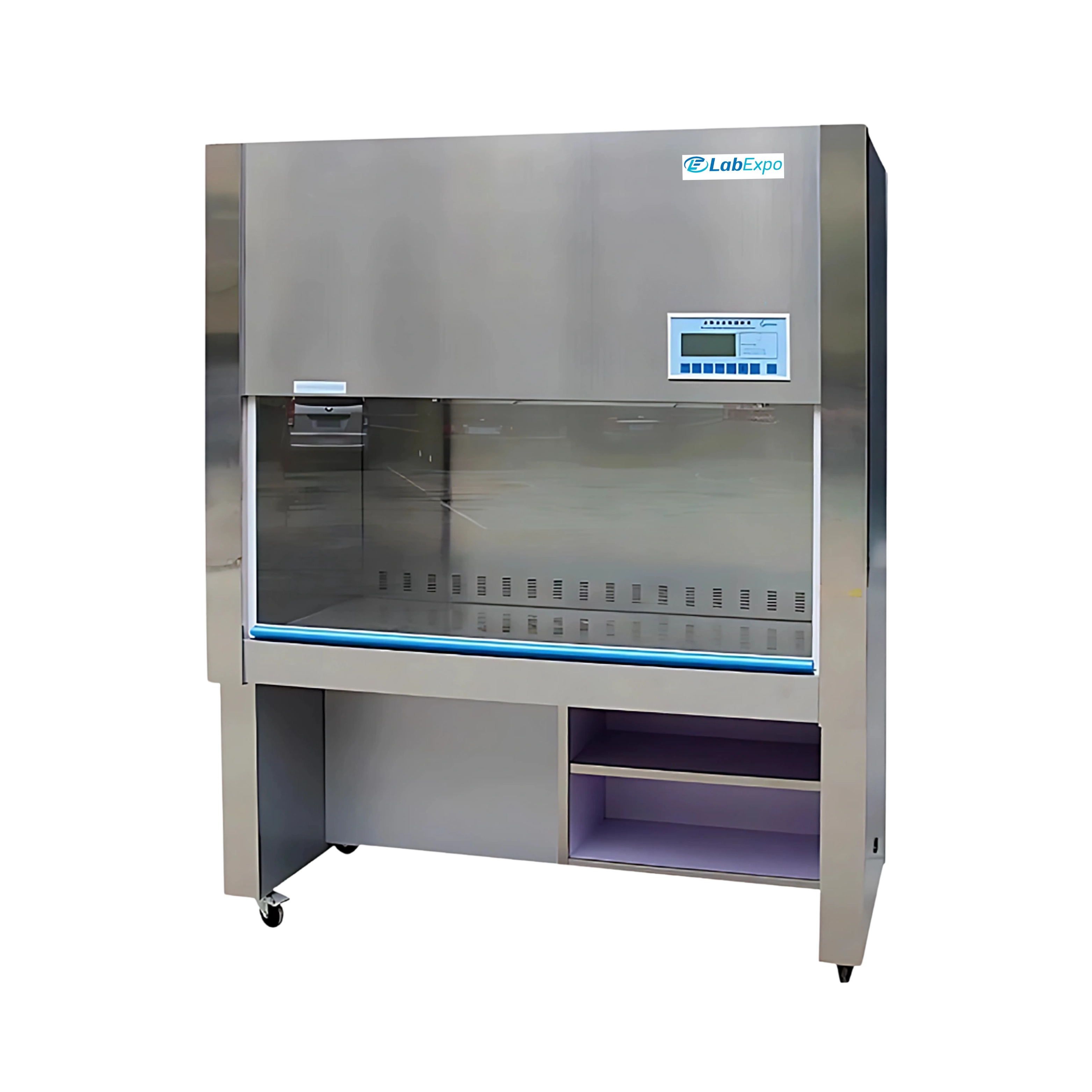
Biological Safety Cabinet Class II B2 56-BSC200 has safety level 2 enclosed cabinet unit where there is no recirculation inside the workspace; 100 % air is exhausted as they are hard connected to exhaust system. This is used to handle volatile toxic chemicals and radio nucleotides where chemical vapor re-circulation into the work zone is not permitted. It meets the requirements for the protection of product, personnel and the environment allowing for the safe handling of pathogens, contaminants or other potentially hazardous materials.
$9,888.00 $ 8240
| Air circulation | 70% |
| Air exhaust | 30% |
| Glass door orientation | 10° tilted |
| HEPA filter | 0.3 micron |
| Air pressure | Vertical negative |
| Cleaning level | 100 level |
| Ascending wind speed | ≥ 0.55 m/s |
| Descending wind speed | ≥ 0.35 m/s |
| Noise | ≤ 58 dB |
| Half ventilation peak value | ≤ 3 µm |
| Personnel protection | CFU ≤ 10 |
| Product protection | CFU ≤ 5 |
| Cross contamination | CFU ≤ 2 |
| Fluorescent lamp | 30 W x 2 |
| UV lamp | 30 W x 2 |
| Power | AC 220 V / 50 Hz |
| Air supply filter dimension | 1590 x 554 x 50 mm |
| Working area | 1600 x 650 x 620 mm |
| Overall dimension | 1795 x 720 x 1950 mm |
| Weight | 380 kg |
Function Implementation High-risk chemical handling Fully ducted 100% exhaust preventing vapor recirculation Radiological material processing External exhaust system for radionucleotide applications Pathogen containment CFU ≤10 personnel protection under validated airflow Product sterility assurance CFU ≤5 culture protection within controlled clean zone
Lab Expo Class II Biological Safety Cabinet supports controlled containment workflows where regulated airflow and HEPA filtration are required for safe biological handling. This class ii bsc operates with defined inflow and downflow air patterns, offering A2 or B2 configurations with recirculation or total exhaust as specified. Microprocessor controls manage airflow stability and monitoring, while stainless steel work surfaces, negative pressure containment, and integrated alarms ensure controlled, compliant operation for routine laboratory procedures.


