Request Quote
Scan the QR code below to connect with us on WhatsApp.

Request Quote
Scan the QR code below to connect with us on WhatsApp.
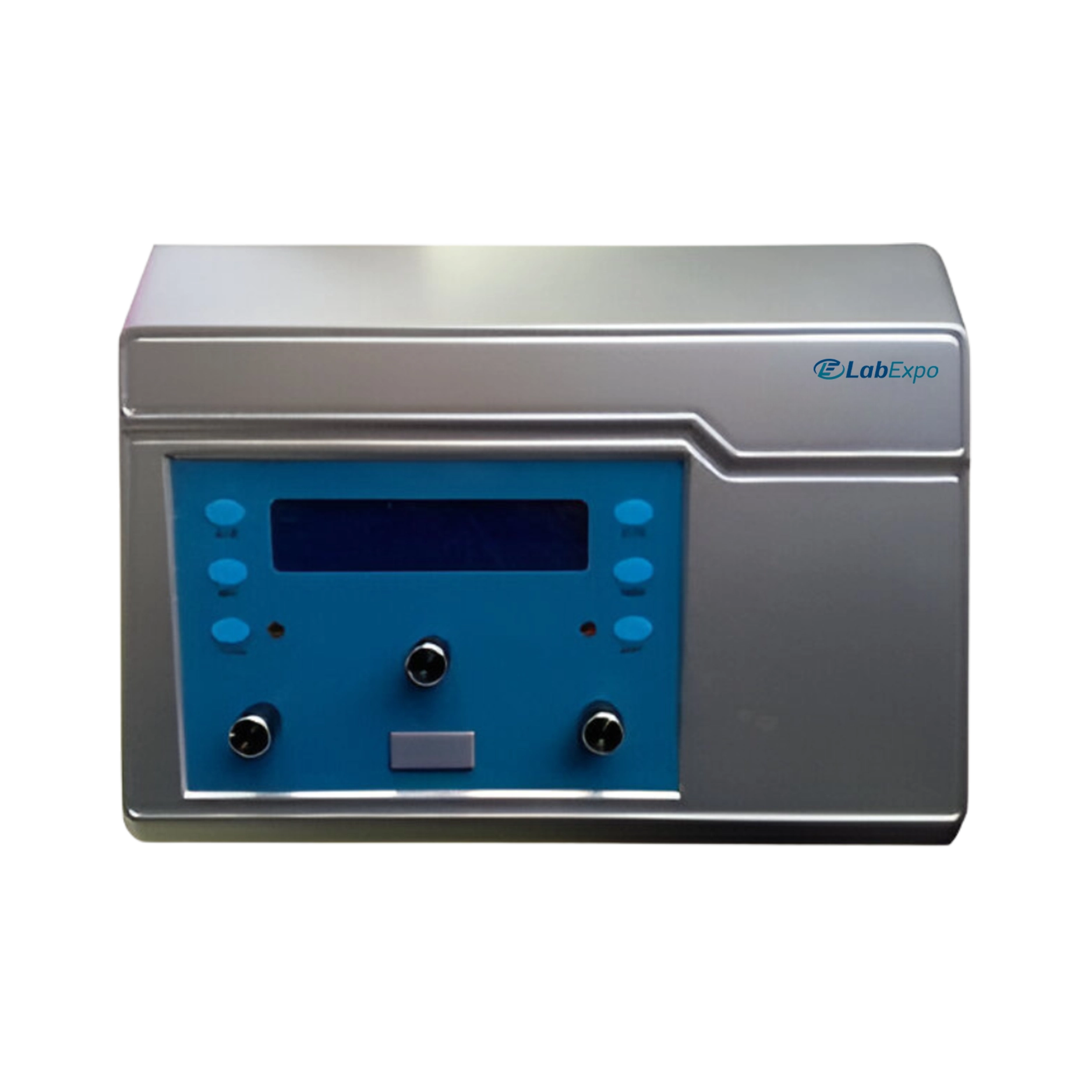
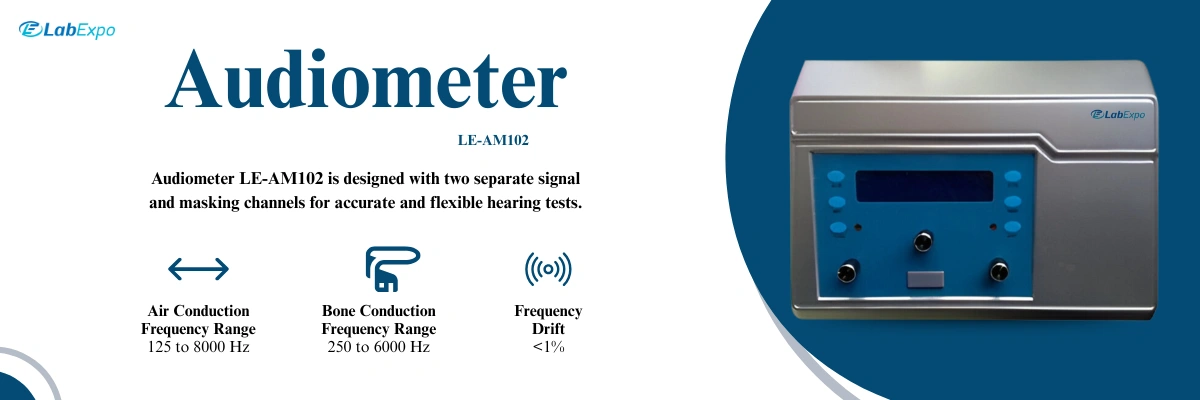
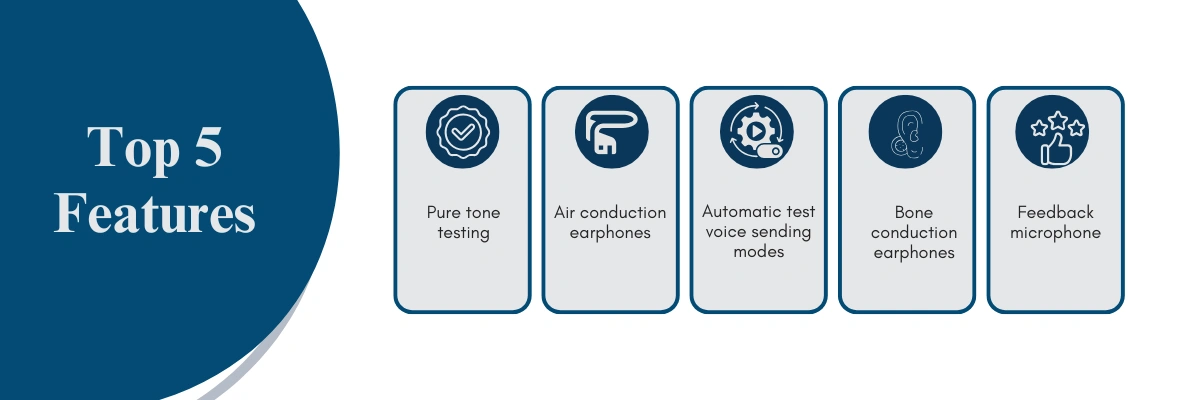
Lab Expo Audiometer LE-AM102 is designed with two separate signal and masking channels for accurate and flexible hearing tests. It features pure tone air conduction testing with continuous, pulse, and warble tones. Built-in microphone allows easy communication with patients during testing. Equipped with a double row LCD display for clear and easy-to-read test information. Our Audiometer LE-AM102 is ideal for hearing tests in schools, industries, army, rehab centers, and training institutes.
$3,408.00 $ 2840
| Air Conduction Frequency Range | 125 to 8000 Hz |
| Bone Conduction Frequency Range | 250 to 6000 Hz |
| Output Intensity(AC) | 10 to 120 dB HL (at 500Hz to 4000Hz)10 to 90 dB HL (at 250Hz)10 to 110 dB HL (at 8000 Hz) |
| Output Intensity(BC) | 10 to 70 dB HL (at 250Hz to 4000Hz) |
| Accuracy | Sound Intensity: ±3dB |
| Frequency Drift | |
| Attenuator Steps | 5dB |
| Display | Double row LCD display |
| Power Supply | 230V |
| Frequency | 50 to 60 Hz |
| Dimension | 450 × 300 × 70 mm |
| Net Weight | 2 Kg |
Function Implementation Hearing test labs 250 to 6000 Hz bone conduction frequency range supports diagnostic evaluations School screening programs 125 to 8000 Hz air conduction frequency range enables comprehensive assessments Industrial audiometry ±3dB sound intensity accuracy ensures measurement reliability Rehabilitation centers 10 to 120 dB HL AC output intensity accommodates varied patient thresholds Training institutes Double row LCD display facilitates clear reading during procedures
Air conduction earphone- 1
Bone conduction earphone- 1
Responder- 1
Earphone
1: What types of test tones are available in this Audiometer?
They provide continuous, pulse, and warble tones, allowing comprehensive evaluation tailored to patient needs.
2: How does the dual-channel design benefit hearing assessments?
These two separate signal and masking channels support simultaneous testing and masking, improving diagnostic accuracy and workflow efficiency.
3: Is this Audiometer suitable for bone conduction assessments?
Yes, this Audiometer supports bone conduction testing across a broad frequency range and includes compatible bone conduction earphones.
4: How is patient communication handled during testing?
It is built with feedback microphone ensures clear interaction with patients, supporting instructions and reassurance without halting the test.
5: Where can this audiometer be effectively deployed?
Our Audiometer is ideal for use in schools, defense institutions, driving schools, industrial workplaces, and hearing rehabilitation centers.
6: What is an Audiometer used for?
An Audiometer is a diagnostic device used by audiologists to evaluate a patient hearing acuity. It measures hearing sensitivity at different frequencies and intensities.
7: How do built-in feedback microphones enhance patient communication?
Built-in feedback microphones allow clinicians to communicate clearly with patients during tests. The adjustable volume ensures that the patient hears instructions without interrupting the test procedure or needing additional devices.
8: What is the benefit of a double row LCD display in an Audiometer?
A double row LCD display allows simultaneous viewing of multiple test parameters such as frequency, intensity and response, making it easier for the clinician to monitor and adjust settings during a hearing test.
9: What is the purpose of the USB interface on an Audiometer?
The USB interface enables quick and secure data transfer from the audiometer to a computer or external storage device, simplifying patient data management and report generation.
10: Can I generate and print reports directly through the USB connection?
Yes, many audiometers allow direct report setup and formatting via USB-connected PCs or printers, enabling quick documentation and patient record updates.
Lab Expo Audiometer systems are used for hearing threshold evaluation across air and bone conduction in clinical settings. The range supports frequency testing from 125 to 8000 Hz (AC) and 250 to 6000 Hz (BC), with output intensity up to 120 dB HL (AC) and 70 dB HL (BC). Systems include signal generation, patient response input, and data interface functions for audiology diagnostics and screening workflows.


