Request Quote
Scan the QR code below to connect with us on WhatsApp.

Request Quote
Scan the QR code below to connect with us on WhatsApp.
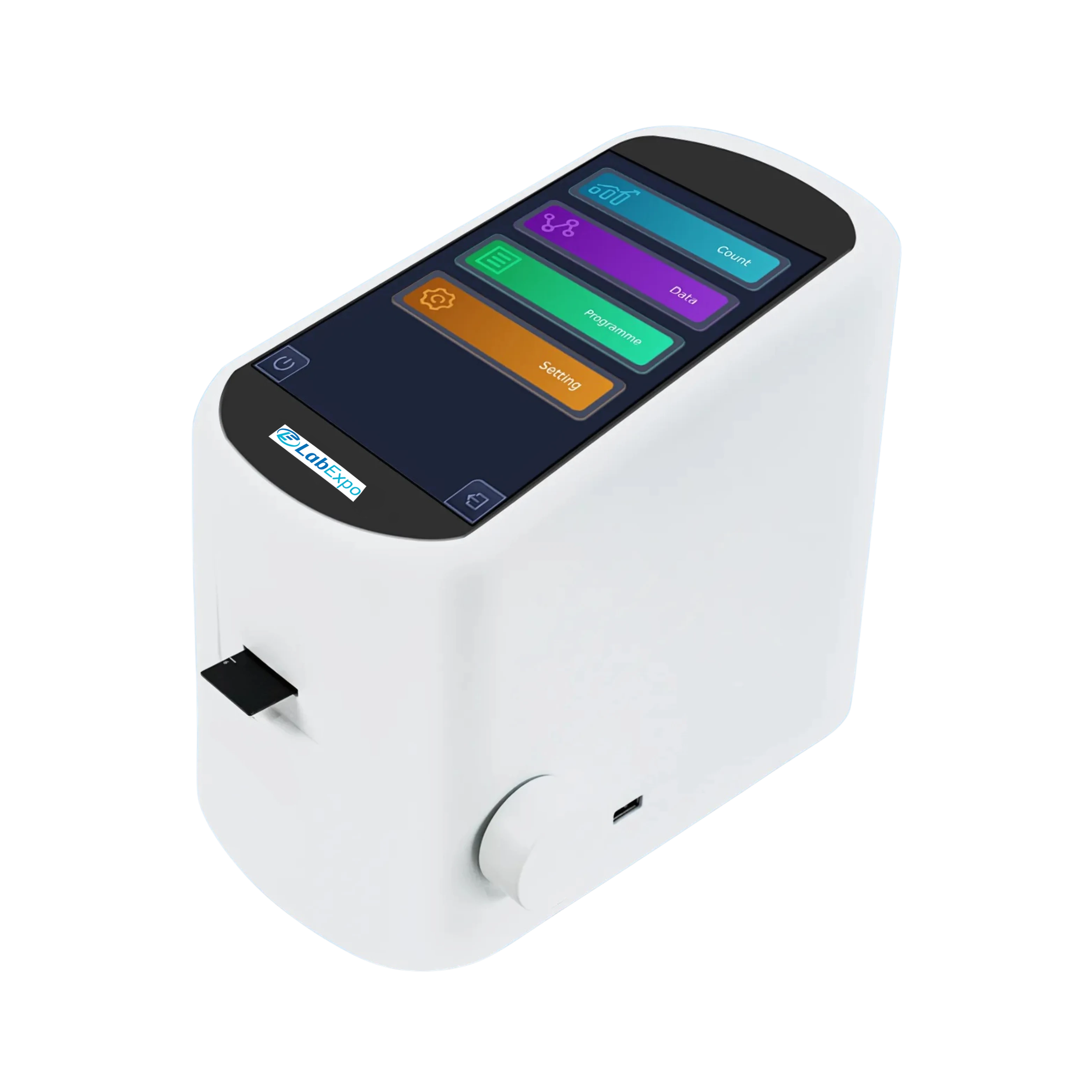
Automated Cell Counter LE-ACC101 offers a concentration range of 1×10⁴ to 3×10⁷ cells/mL for accurate cell quantification. It features a diameter detection range of 5 to 200 μm to accommodate various cell types and sizes. Equipped with a 7-inch touch screen enabling intuitive operation and real-time data visualization. Integrated viability analysis supports a 0 to 100% range for precise live/dead cell assessment. Our Automated Cell Counter is ideal for rapid and accurate cell counting in research laboratories, clinical settings, and biopharmaceutical applications.
$5,122.00 $ 4268
| Concentration Range | 1 × 10⁴ to 3 × 10⁷ cells/ml |
| Viability Range | 0 to 100% |
| Diameter Range | 5 to 200 μm |
| Measurement Time | < 1 second |
| Sample Volume | 10 μL or 20 μL |
| Screen | 7-inch Multi-Touch Color Display Screen |
| Camera | 6.3 Million Pixels (Color, High-Definition) |
| Storage | 128 GB hard drive |
| Output Format | jpg, PDF, csv |
| Interfaces | 2 USB Ports and 1 RJ45 Network Port |
| Applicable Consumables | Five six-digit counting slide |
| Dimension | 245 × 139 × 205 mm |
| Packing Dimension | 350mm*300mm*350mm |
| Weight | 2 Kg |
| Gross Weight | 2.2 Kg |
Function Implementation Automated cell counting Image-based analysis replacing manual hemocytometer counts Viability quantification Live/dead cell calculation using integrated fluorescence/brightfield Cell size profiling Broad diameter detection for diverse cell types Rapid throughput Quick sample turnaround supporting high-volume workflows Data management Onboard storage and export for reports


Lab Expo Automated Cell Counter enables high-throughput cell analysis where automated operation and repeatable accuracy are required to streamline routine and critical workflows. This auto cell counter operates with automated optical detection to quantify cell concentration and viability across varied sample types. Touchscreen digital controls manage analysis and data handling, while automated processing reduces manual intervention and error, ensuring consistent, controlled performance for daily laboratory use.


