Request Quote
Scan the QR code below to connect with us on WhatsApp.

Request Quote
Scan the QR code below to connect with us on WhatsApp.
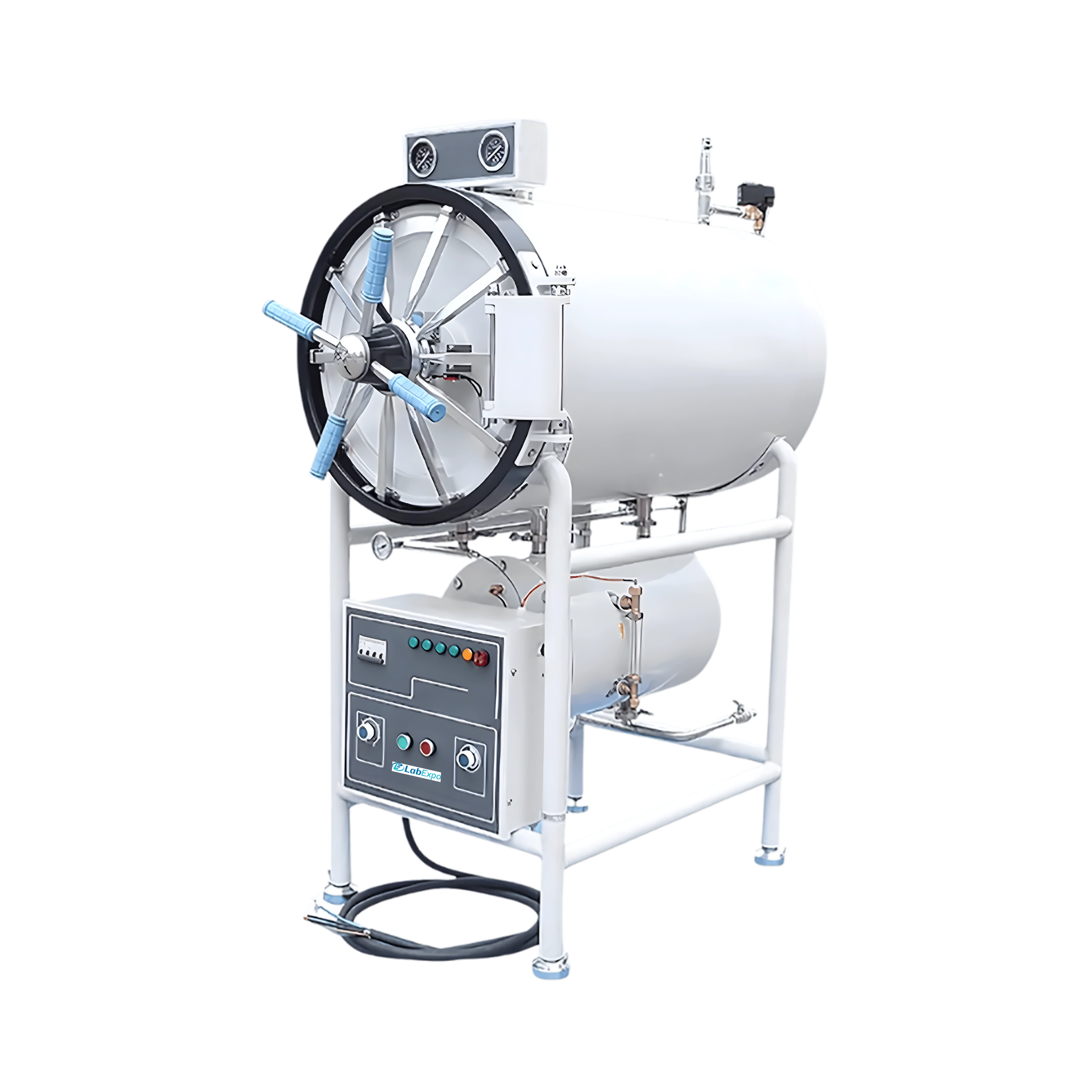
Horizontal Autoclave LE-AC201 features a spacious 150-liter chamber, designed to deliver uniform heat distribution. It offers a temperature variation of ≤ ±1°C for consistent sterilization results. Featuring an energy-efficient heating system for reduced power consumption and construction, corrosion-resistant stainless steel. Our Horizontal Autoclave provides long-term durability and ease of maintenance.
$7,620.00 $ 6350
| Capacity | 150 L |
| Sterilization Temperature | 134 °C |
| Sterilization Pressure | 0.22 MPa |
| Timer Range | 0 to 60 minutes |
| Heat Average | ≤ ±1 °C |
| Power Consumption | 9 kW |
| Power Supply | 50 Hz |
| Chamber Dimension | 440 × 1000 mm |
| Dimension | 1400 × 600 × 1300 mm |
| Net Weight | 240 kg |
| Gross Weight | 320 kg |
Function Implementation Instrument Sterilization Medical instruments and reusable equipment Equipment Processing Heat- and pressure-resistant healthcare devices Clinical Workflow Support Routine sterilization cycles in hospital settings
Printer function
Seal


1: Which capacity does the Horizontal Autoclave LE-AC201 have?
It offers a 150-liter chamber, allowing efficient sterilization of large loads.
2: Which control system does this autoclave use?
It is equipped with a microprocessor-based digital control panel for precise operation.
3: Which safety features are included?
It has an advanced safety mechanism to protect against overpressure and overheating.
4: Which cooling method is provided?
It features a rapid cooling system for faster cycle completion and safe handling.
5: Which industries can benefit from this autoclave?
It is ideal for hospitals, healthcare centers, and laboratories that require reliable sterilization of instruments and equipment.
6: Why is high-grade stainless steel used in Horizontal Autoclaves?
High-grade stainless steel is used for the chamber and internal components to ensure long-term durability, high corrosion resistance and compliance with hygiene standards in sterile environments.
7: What are the benefits of digital controls in Horizontal Autoclaves?
Digital controls provide accurate readings, consistent performance, real-time monitoring, error alerts and the ability to store and repeat sterilization cycles, improving efficiency and traceability.
8: Can users program custom sterilization cycles?
Most horizontal autoclaves allow users to program and save custom sterilization parameters, adapting the process to different types of instruments or materials.
9: What does fully automated operation mean in your autoclaves?
Fully automated operation means the autoclave manages the entire sterilization cycle filling, heating, sterilizing, pressure release and drying without manual intervention.
10: How is maintenance simplified in a fully automated autoclave?
The system performs internal checks, alerts users for maintenance schedules and reduces manual handling thus extending equipment lifespan and minimizing upkeep requirements.
Lab Expo Horizontal Autoclaves are applied in high-capacity sterilization workflows where large instrument loads require uniform steam distribution and controlled cycle execution. Each horizontal steam sterilizer operates using pressurized steam and is constructed from stainless steel to support continuous operation and corrosion resistance. Digital control systems regulate temperature, pressure, and cycle parameters, while integrated safety mechanisms support automated operation and controlled processing of large-volume loads.


