Request Quote
Scan the QR code below to connect with us on WhatsApp.

Request Quote
Scan the QR code below to connect with us on WhatsApp.
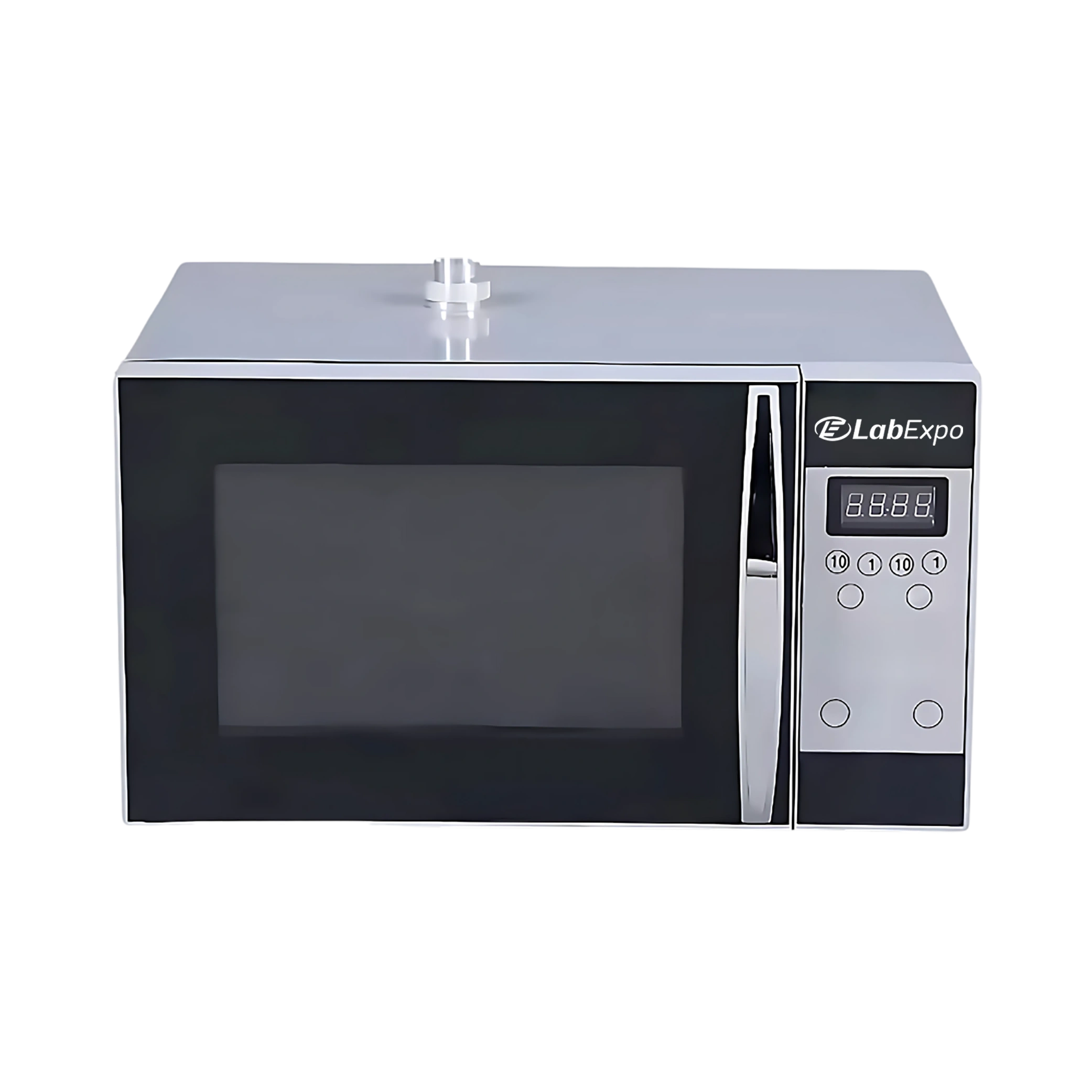
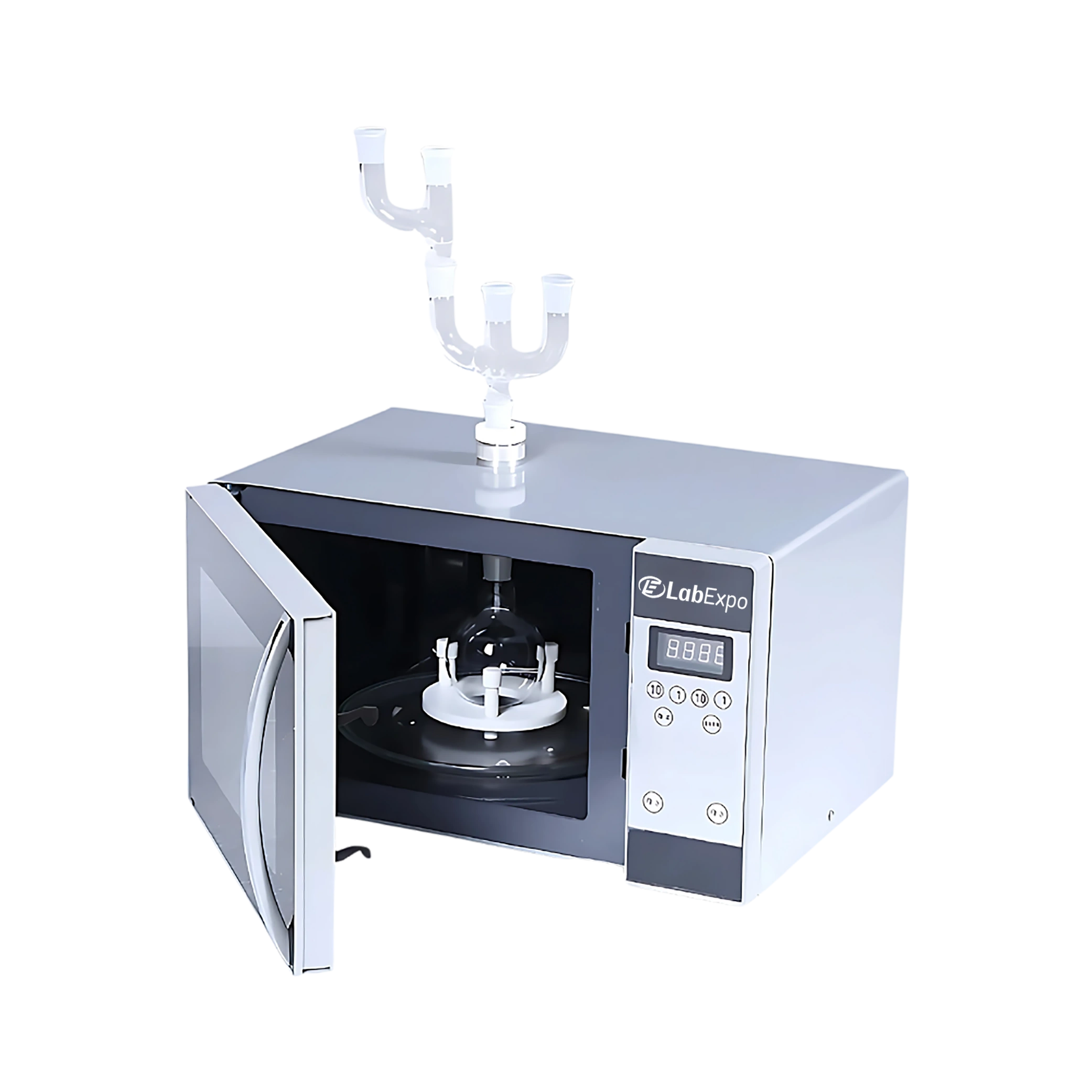
Lab Expo Microwave Chemical Reactor LE-MR101 ensures precise reaction control with adaptive PID technology. It is designed for rapid heating and quick responsiveness during chemical processes. Integrated adjustable microwave power enables flexibility across various applications. Built-in LCD display provides clear visualization of operating parameters and status. Our Microwave Chemical Reactor is ideal for organic synthesis, material science, and pharmaceutical research.
$2,825.00 $ 2354
| Frequency | 2450±50 MHz |
| Maximum Input Current | 7.8 A |
| Rated Maximum Output Power | 750 W |
| Rated Power Consumption | 1100 W |
| Power Supply | 220 V |
| Chamber Dimension | 330 × 365 × 235 mm |
| Packing Dimension | 480 × 540 × 540 mm |
| Gross Weight | 20 kg |
Function Implementation Chemical synthesis labs 750 W enables rapid heating for organic reactions Material science testing 2450±50 MHz frequency supports precise material processing Pharmaceutical research Adjustable power control facilitates flexible reaction optimization Quality control environments PID technology maintains consistent thermal conditions during analysis Industrial process development 1100 W input allows sustained operation in continuous workflows

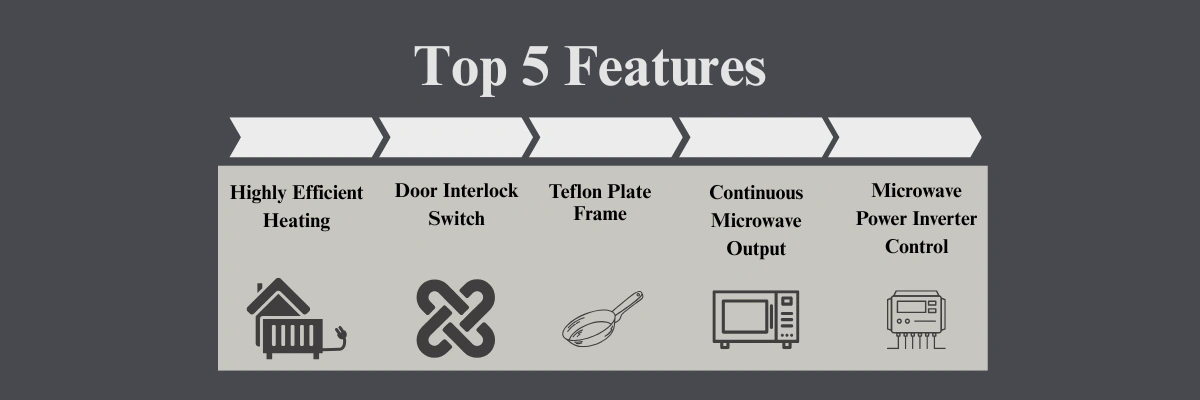
Lab Expo Microwave Chemical Reactors are structured around uniform microwave energy coupling to drive controlled reaction acceleration. This microwave reactor integrates precise temperature and pressure regulation with adjustable power output for fine reaction tuning. Real-time monitoring, reinforced pressure containment, and integrated safety interlocks support reproducible synthesis, improved yield control, and efficient operation in chemical, pharmaceutical, and materials research workflows.


