Request Quote
Scan the QR code below to connect with us on WhatsApp.

Request Quote
Scan the QR code below to connect with us on WhatsApp.
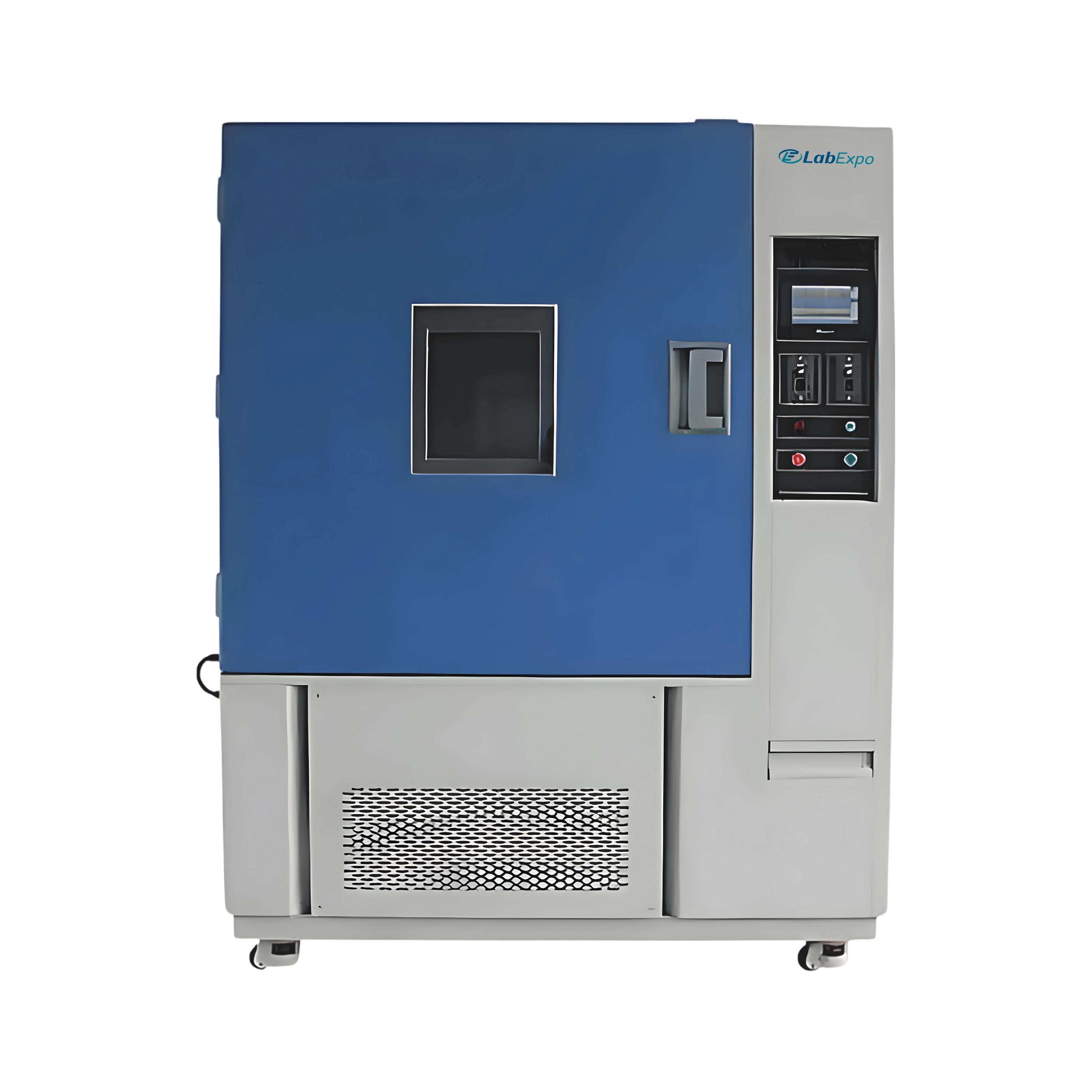
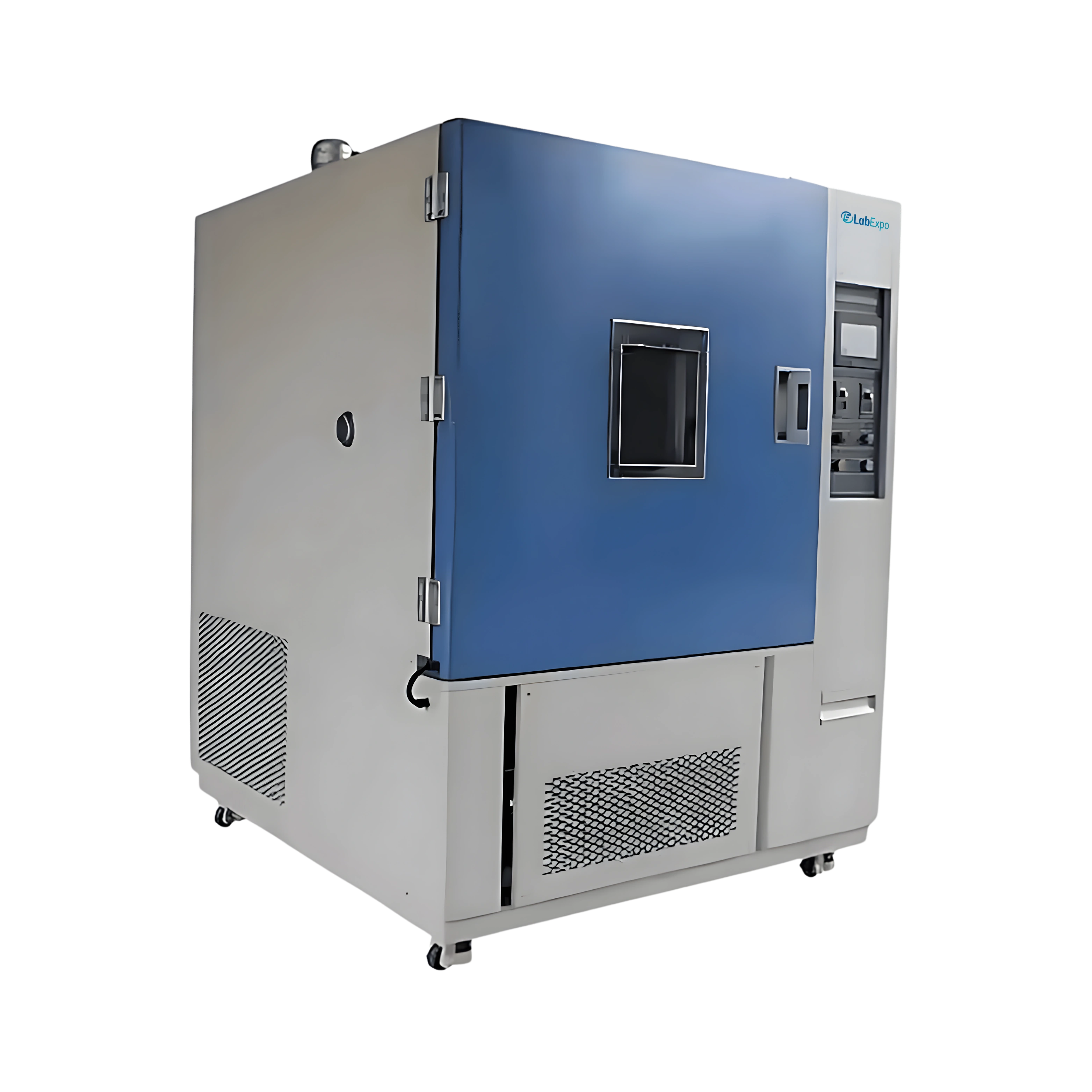
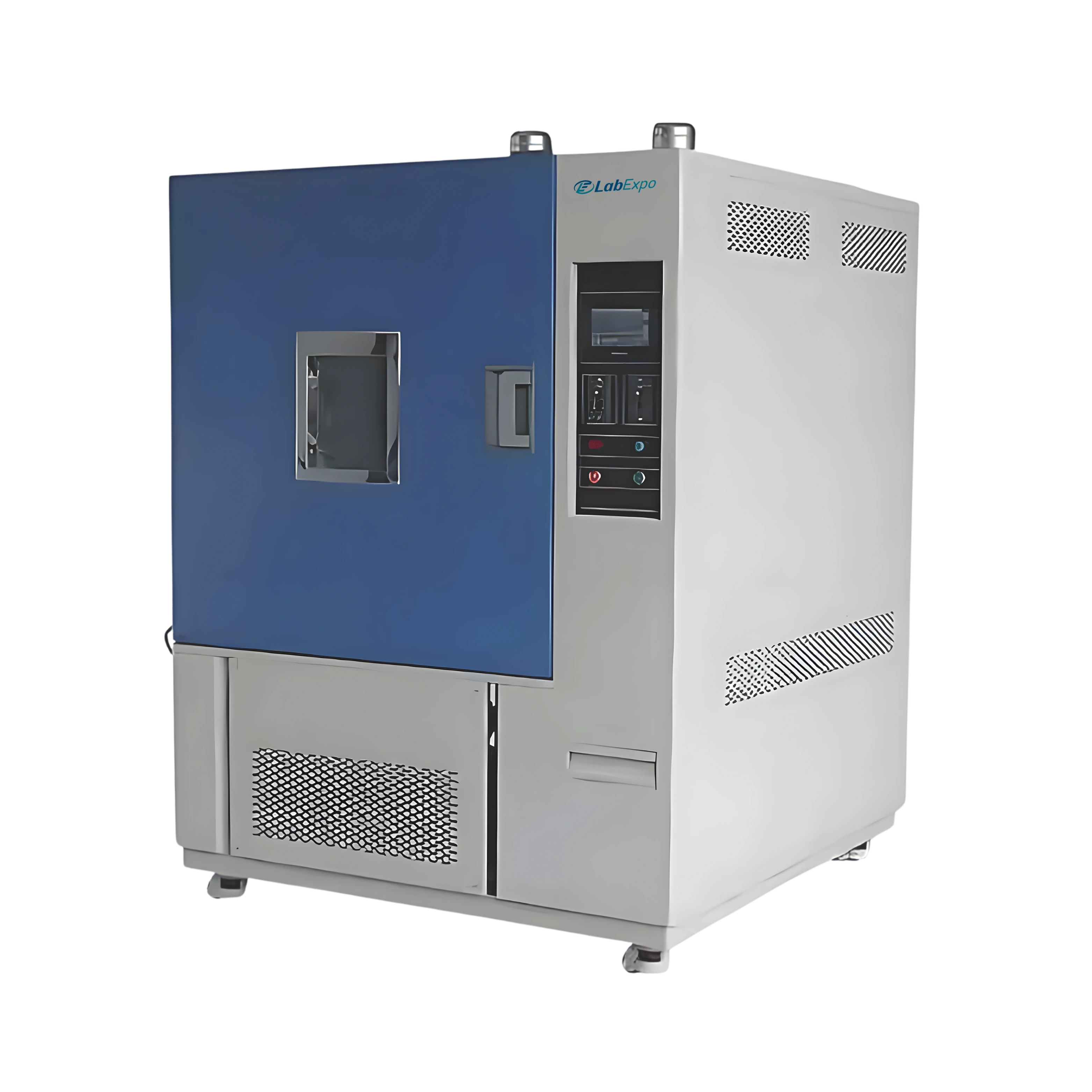
Ozone Test Chamber 24-OTC104 provides controlled ozone exposure for material aging evaluation, temperature range from 0℃ to 100℃ and humidity control from 30% to 98% RH. Built with corrosion-resistant stainless steel and equipped with UV detector for real-time monitoring, it supports quality assessment in rubber, plastics, packaging, medical devices and automotive sectors under standardized environmental stress conditions.
$54,295.00 $ 45246
| Diameter of holder (mm) | 900 |
| Length of each side (mm) | 460 |
| Temperature range | 0℃ to 100℃ |
| Humidity range | 30 % to 98 % R.H |
| Temperature fluctuation | ± 0.5 ℃ |
| Speed rate for cooling | Ambient to 0 ℃ within 20 min |
| Timing range | 0 to 999 hours |
| Ozone concentration | 1 to 1000PPHM |
| Sample holder rotate speed | 0 to 10 r/min (adjustable) |
| Clamps tensile stretch | 5 % to 35 % |
| Max. ozone concentration | 120 g O3/m³ |
| Ozone output | 3.5 g O3/h (oxygen input, flow rate 100L/h) |
| Nominal power | 11000 W |
| Internal dimensions | 1000 × 1000 × 1000 mm |
| Overall dimensions (mm) | 1500 × 1550 × 2110 mm |
| Power & voltage | AC 380 V 50Hz |
Function Implementation Material aging assessment 1 to 1000PPHM enables controlled ozone exposure testing Rubber product validation ± 0.5 ℃ ensures stable thermal conditions during evaluation Plastic component testing Ambient to 0 ℃ within 20 min supports rapid cooling cycles Holder rotation sampling 900 mm diameter accommodates large test specimens Extended duration studies Timing range: 0 to 999 hours allows prolonged exposure monitoring
Lab Expo Ozone Test Chamber enables controlled material aging and degradation studies through precise regulation of ozone concentration and temperature. Suitable for research, quality control, and industrial evaluation, this ozone chamber supports uniform exposure with real-time ozone monitoring via integrated detection systems. Corrosion-resistant build, programmable control, and stable ozone generation ensure repeatable testing conditions across long-duration environmental test cycles.


